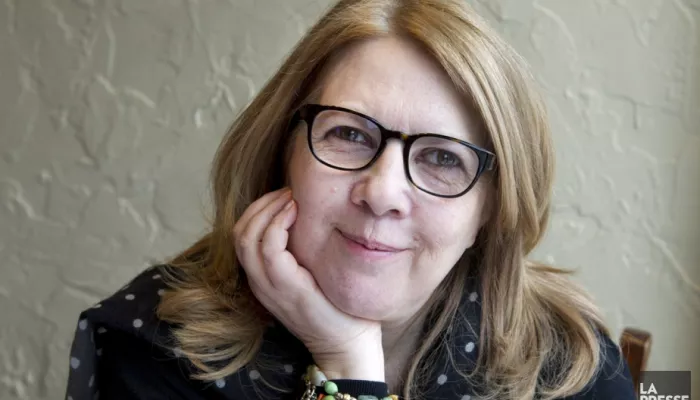
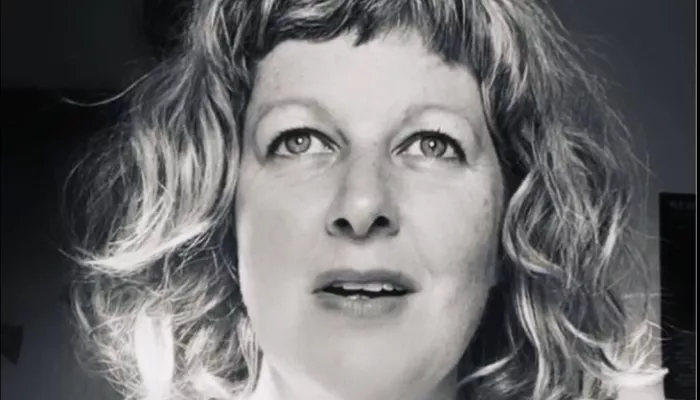
Lauren Carter
Biographie
Born in Ontario, Lauren Carter grew up on the North Shore of Lake Huron, a terrain of forest and big water which haunts her work, and now lives outside Winnipeg, Manitoba. She’s published six books – three novels, a short story collection, and two poetry collections. Her debut, Lichen Bright, was longlisted for the ReLit Award while her first novel, Swarm, was longlisted for Canada Reads. Her second novel, This Has Nothing To Do With You won the Margaret Laurence Award for Fiction and came out the same year as her poetry collection, Following Sea, which recounts family ancestry and infertility, including the journey of her great-great-grandparents from mid-19th-century Niagara to Manitoulin Island. A writer of narrative and sometimes confessional poetry, she’s been influenced by Sylvia Plath, Evelyn Lau, Susan Musgrave, Micheline Maylor, among others. She holds an MFA in Creative Writing from the University of Guelph and regularly teaches online and in-person workshops and runs writing retreats through her business Wild Ground Writing Retreats. Find her at www.laurencarter.ca
Entrevue
My house was full of books. As a pre-teen, I got my hands on my mom's anthology of the British canon from her university days and fell in love with "The Highwayman" by Alfred Noyes. I found it so exciting! "The moon was a ghostly galleon tossed upon cloudy seas... And the highwayman came riding, riding, riding, the highwayman came riding"... etcetera.
Then, one day, when I was in grade nine or so, I was flipping through a book in my high school library and came across a poem by Susan Musgrave. I wish I could remember the title. What I do remember, though, is that the description of a heart made me think, Wait a second! You're allowed to write like that?!
After that, I started writing and reading free verse and more contemporary poetry. I found Sylvia Plath and Evelyn Lau. I read and wrote mostly in silence because I lived in a very small town in northern Ontario where nobody I knew was writing poetry. I persevered.
I started writing poetry as a kid. As a teenager, I wrote avidly. My late uncle, also a writer who lived far away in Utah, taught me how to submit my work using the hefty Writer's Market. I started sending out fat envelopes with the required S.A.S.E. (obviously, this was pre-Internet days). I published my first poem in a Saskatchewan journal called Green's when I was 18 and went from there. I've always thought of myself more as a writer, though, than a poet, since I write in multiple genres and actually enjoy writing fiction more. Poetry comes for me from deep and difficult emotions so it often hurts.
To elucidate our own experience in such a way that it echoes on a universal level. To express this with such specificity and precision that it plugs into another's and gives them that little bit of a thrilling shock. To point to what cannot easily be seen and give it outlines, shading, form, dimension.
Probably Lorna Crozier's Packing for the Future: Instructions. I love its vivid imagery and imagination and rhythm.