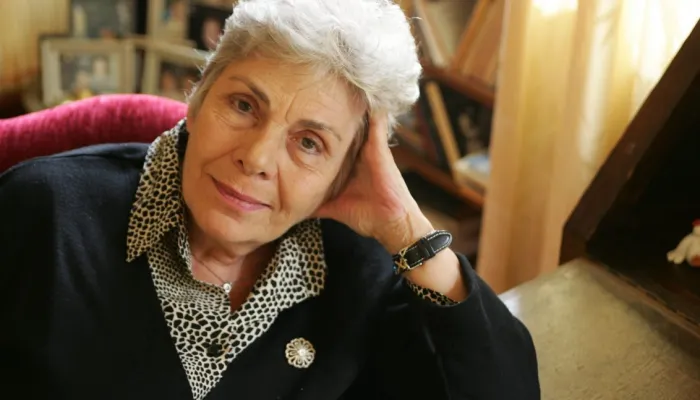
Susan Olding
Biographie
Susan Olding is the author of Big Reader: Essays, and Pathologies: A Life in Essays. Her award-winning nonfiction, fiction, and poetry have appeared widely in literary journals, magazines, and anthologies throughout Canada and the U.S., including Arc Poetry Magazine, The Malahat Review, The New Quarterly, Queen’s Quarterly, and In Fine Form, (Second Edition). Born in Toronto, she lives and writes in the traditional territory of the Lekwungen and W̱SÁNEĆ nations, in Victoria, British Columbia.
Entrevue
The first poems I remember falling in love with were “The Owl and the Pussycat” and “The Highwayman,” which I memorized and declaimed for some kind of elocution assignment in elementary school—much to my classmates’ chagrin. Then came Dylan Thomas’s Under Milkwood, which I saw performed in a local high school when I was a preteen. Eventually I came across a poetry anthology that included poems by more-or-less contemporary Canadians as well as poems from other parts of the world, mainly Britain and the U.S. This was as good as a box of chocolates. I mean—the poems! More Dylan Thomas, yes…but also P.K. Page, and Sylvia Plath, and Elizabeth Bishop, and Lorna Crozier. I came under the spell of Auden’s “In Praise of Limestone” and would go back to it again and again, not really understanding it, but in love with its rhythms and what I see now as its essayistic tone.
I started writing poems in elementary school. Little rhymes and haiku, which I think I was introduced to in second grade. I’ve continued, off and on, more or less ever since, often alternating with stories. I am not sure I consider myself “a poet.” That feels like a determination someone else should make, not me. I write, and sometimes what I write takes the shape or sound of a poem.
I’m not sure the poet has a “job,” per se. But I do think that poetry can help us see, and hear, and feel more acutely, and so maybe the poet’s role is to witness, and listen, and lean on the language until it sings —or stings us awake.
I used to have Keats's "To Autumn" by heart, and I would love to revisit it. And I think everyone should know Elizabeth Bishop's "One Art."